
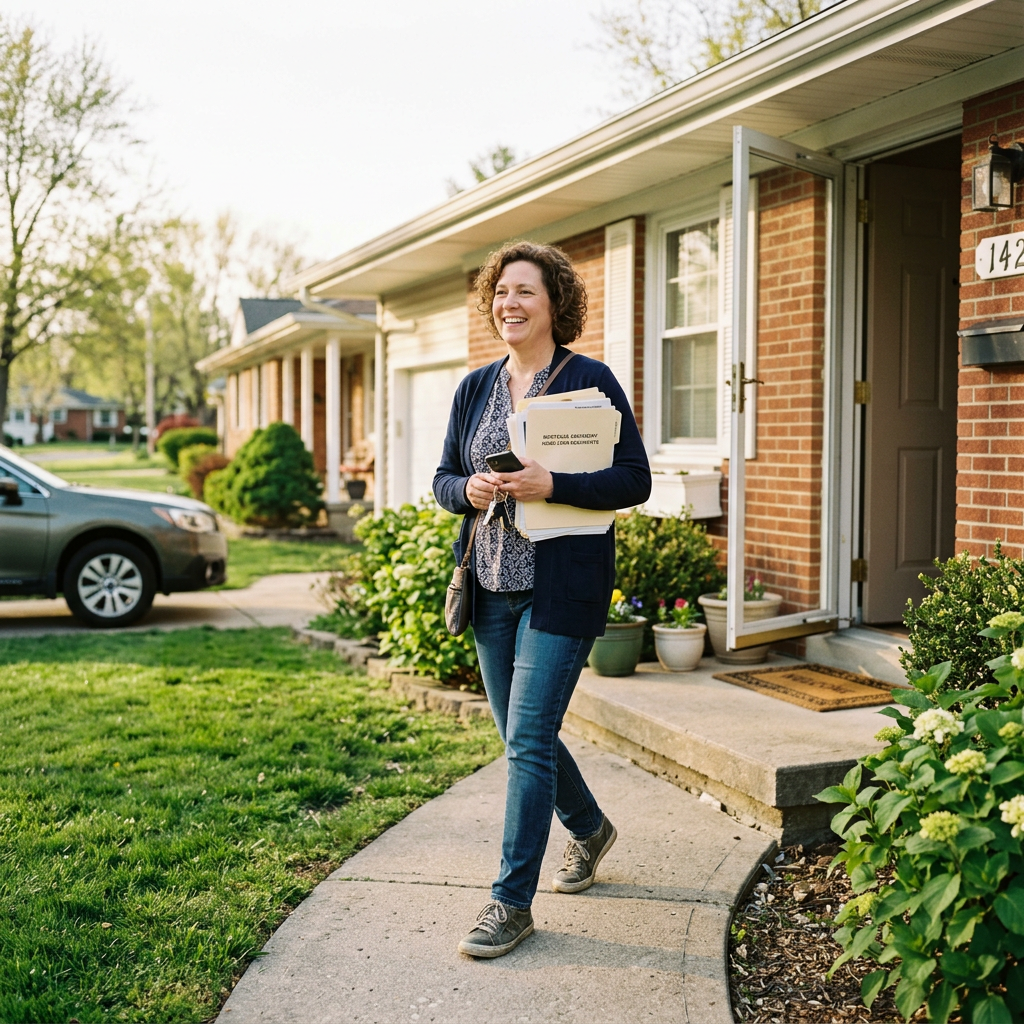
If you are a Northeast Florida homeowner who bought before 2020 and locked in a rate in the 2s or 3s, you have probably thought: I would love to move, but giving up that rate feels financially painful. It is a completely rational concern — and it has kept hundreds of thousands of homeowners nationally locked in homes that no longer fit their needs. But something is shifting in 2026. Danielle Fraser at daniellefraserrealestate.com works with rate-locked homeowners across Nocatee (32081), St. Augustine (32084), Ponte Vedra Beach, Jacksonville, and Palm Coast (32137) who are navigating this exact decision.
Why Are More Northeast Florida Homeowners Giving Up Low Mortgage Rates?
The “rate lock-in” effect — where homeowners with sub-4% rates choose not to move rather than take on a 6%+ rate on a new purchase — has been one of the defining features of the Northeast Florida housing market since 2023. It has suppressed resale inventory in many communities and contributed to the supply shortage that kept prices elevated even as buyer demand softened.
But more homeowners are beginning to move despite the rate differential — and their reasons reveal an important truth: a low mortgage rate is only one factor in a much larger life equation.
The life events driving rate-locked homeowners to sell in 2026 include:
Growing families that have outgrown their home. A family that purchased a 2-bedroom starter home in Mandarin or Palm Valley in 2019 with a 3.25% rate now has two children and needs a 4-bedroom with a yard in a top-rated school zone. The monthly payment difference between keeping the low-rate starter home and buying a larger home in Nocatee or Creekside High School zone may be $600 to $800 per month — but the quality-of-life difference is measured in years of living in the right space for their family.
Downsizing empty nesters who are equity-rich. A couple in Ponte Vedra Beach or Sawgrass who purchased in 2018 with a low rate has accumulated $300,000 to $500,000 or more in equity. Downsizing to a maintenance-free villa or condo in St. Augustine or an active adult community often produces a transaction where the equity from the sale offsets the higher rate — or where they can purchase a smaller, less expensive home entirely free and clear.
Divorce, job relocation, and health changes. Life transitions do not pause for mortgage rate cycles. A divorce that requires splitting equity, a job opportunity requiring relocation to a different part of Northeast Florida or out of state, or a health change requiring single-story living — these events make the move necessary regardless of the rate differential.
Financial need to access equity. Homeowners who need capital for a business, education costs, aging parent care, or other major expenses sometimes find that selling and downsizing is more advantageous than a HELOC or cash-out refinance, especially when current rates make refinancing unattractive.
How Do You Think About the Rate Trade-Off Honestly?
The way most homeowners frame the rate lock-in decision understates the cost of staying. Consider: a homeowner paying $1,800 per month for a home that no longer fits their needs is paying the full opportunity cost of that misfit every single month — in children sharing bedrooms, in a commute from the wrong location, in deferred life decisions that compound over years.
The honest comparison is not just: my current rate vs. a new rate. It is: the total cost of staying in a home that does not fit versus the total cost of moving to one that does, inclusive of the rate differential and the equity you bring to the transaction.
For many Northeast Florida homeowners, that honest comparison — particularly for those with significant equity — produces a different answer than the surface-level rate comparison suggests.
Frequently Asked Questions: Rate Lock-In in Northeast Florida
If I sell my 3% rate home and buy a new home at 6.5%, how much more will I pay monthly?
On a $400,000 mortgage balance, the difference between a 3% and a 6.5% rate is approximately $750 to $800 per month in payment. However, if you are buying down in price (downsizing), buying with significant equity reducing your new loan balance, or if your household income has grown since your original purchase, the net payment impact may be significantly less than the rate comparison suggests.
Is it worth giving up a low rate to buy in Nocatee or St. Johns County?
For families prioritizing school access to Bartram Trail, Creekside, or Nease High School, many decide the school-zone premium — even at a higher rate — is worth it during the years their children are in those schools. The decision is personal, but Danielle Fraser can help you run the actual numbers for your specific situation.
What happens to my low-rate mortgage when I sell my home?
Most conventional mortgages are not assumable by a new buyer — your rate does not transfer. When you sell, your mortgage is paid off from the proceeds and you start fresh with a new loan on your next purchase. However, VA loans are assumable, which creates a potential negotiating advantage for sellers with VA loans — Danielle Fraser, as the wife of a retired U.S. Marine, has direct experience navigating VA loan assumability in Northeast Florida transactions.
Key Takeaway
More Northeast Florida homeowners are choosing to move despite their low rates because life’s real priorities — family space, school access, downsizing, life transitions — do not wait for mortgage rate cycles to align. If you have been sitting on the fence about a move because of your rate, Danielle Fraser can help you run the real numbers for your specific situation and decide whether staying or moving actually serves your family better.
Contact Danielle Fraser, P.A. today:
📞 (904) 907-4559
📧 danielle@daniellefraserrealestate.com
🌐 daniellefraserrealestate.com