
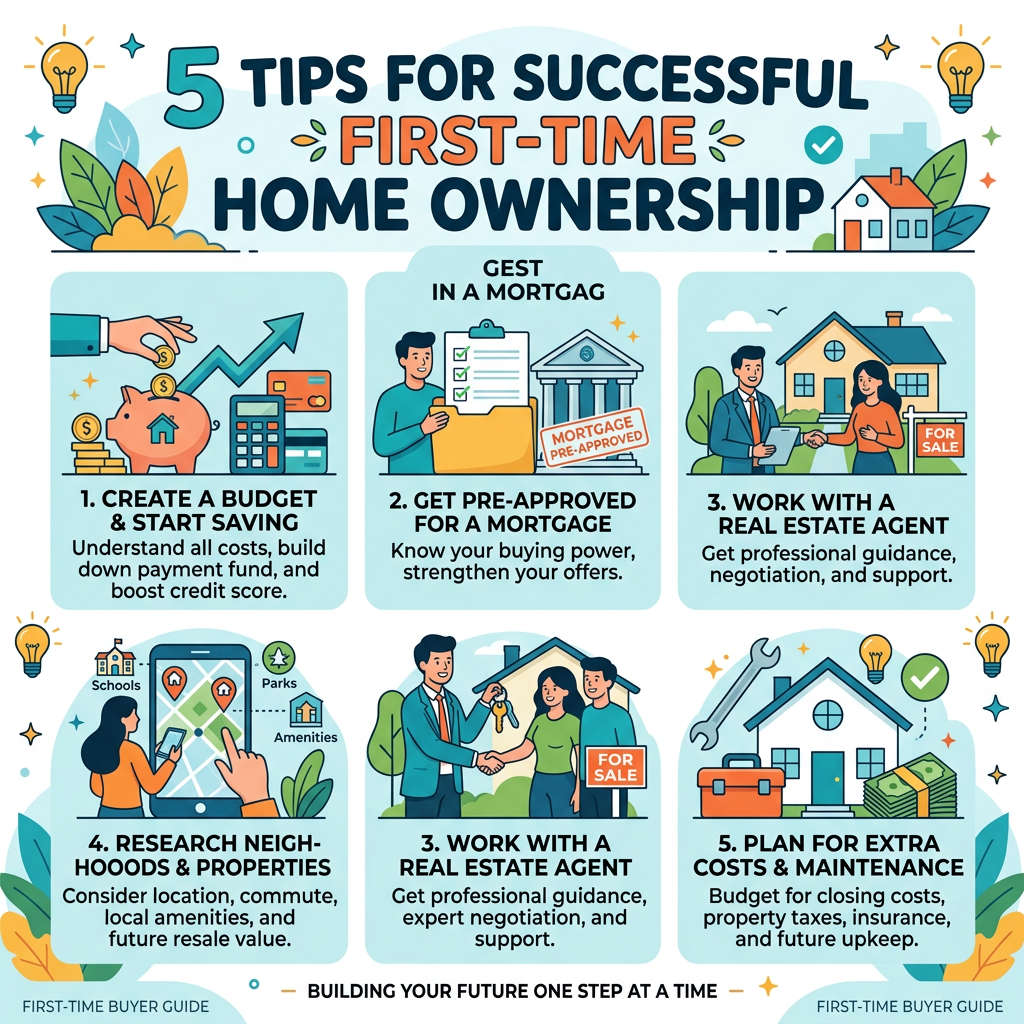
Buying your first home in Northeast Florida is one of the most exciting and financially meaningful steps you will take — and the homeowners who thrive in that first year are the ones who go in prepared. Whether you are buying in Nocatee, St. Augustine, Jacksonville, Palm Coast, or the Jacksonville Beaches, the fundamentals of successful first-time homeownership are the same. Danielle Fraser at daniellefraserrealestate.com has guided dozens of first-time buyers across the First Coast and shares the five practices that consistently separate confident, thriving new homeowners from those who feel overwhelmed.
1. Build a True Homeownership Budget Before You Move In
Your mortgage payment is only one part of what it costs to own a home in Northeast Florida. Before closing, build a complete monthly budget that includes your mortgage principal and interest, property taxes (escrow), homeowner’s insurance (which has risen substantially in Florida — budget $2,500–$5,000+/year depending on location and coverage), HOA dues if applicable (common in Nocatee at $80–$200/month, RiverTown, and other master-planned communities), and a maintenance reserve. A practical maintenance reserve for Florida homes is 1–2% of the home’s value annually. On a $380,000 home, that is $3,800–$7,600 per year for HVAC service, roof maintenance, appliance repairs, landscaping, and unexpected items.
2. Understand Your Homestead Exemption and File It Immediately
Florida’s Homestead Exemption reduces your assessed property value by $50,000 for tax purposes — saving most Northeast Florida homeowners $500–$1,200/year in property taxes. But you must apply by March 1 of the year following your purchase. If you close in December 2026, you must apply by March 1, 2027, to receive the exemption for the 2027 tax year. The application is filed with your county property appraiser — St. Johns County, Duval County, or Flagler County depending on where you live. Many first-time buyers miss this and overpay for years. File it immediately after closing.
3. Get to Know Your Home’s Major Systems Before You Need to Repair Them
One of the most common first-time homeowner mistakes is waiting until something breaks to learn how your home works. In the first month, locate your main water shutoff, circuit breaker panel, HVAC air handler and condenser, water heater, and any irrigation system controls. In Northeast Florida’s climate, your HVAC is the highest-cost system — have it serviced annually and change filters every 30–90 days depending on filter type and pet/allergy status. Know your roof age and condition. If your home has a septic system (common in rural St. Johns County and Flagler County), understand the pumping schedule and what not to flush.
4. Build Your Local Service Provider Network Early
Waiting until a pipe bursts or an AC fails in August to find a reliable contractor is one of the most stressful experiences a new homeowner can have. In the first 60 days, identify and save contact information for a trusted HVAC company, plumber, electrician, and general handyman in your Northeast Florida community. Ask your neighbors for recommendations — in communities like Nocatee, St. Augustine, and the Beaches, neighborhood Facebook groups and Nextdoor are excellent resources for vetted local service providers. Danielle Fraser is also happy to share her trusted vendor list with any buyer she has worked with.
5. Stay on Top of Your Mortgage and Escrow Each Year
Your mortgage payment can change. Florida property taxes are reassessed annually, and insurance premiums can increase — both of which affect your escrow payment. Your servicer will send an escrow analysis each year and may adjust your monthly payment up or down. Review this letter carefully when it arrives. If your escrow comes up short, you will owe a lump sum or face an increased monthly payment. If you escrow overpays, you receive a refund. Staying informed each year prevents surprises and lets you adjust your budget proactively.
Frequently Asked Questions: First-Time Homeownership in Northeast Florida
What is the most common financial mistake first-time buyers make after closing in Northeast Florida?
Underestimating insurance costs. Florida homeowner’s insurance has risen dramatically, and many first-time buyers budget based on quotes that do not reflect accurate flood zone, roof age, or coverage level. Always get a binding insurance quote before making an offer — not after.
Should I buy a home warranty for a Northeast Florida home?
Selectively. On a new construction home with builder warranties, a home warranty adds less value. On a resale home with aging HVAC, appliances, or plumbing, a home warranty can provide meaningful budget protection. Danielle Fraser can advise on whether a seller-provided warranty is worth negotiating into your purchase contract.
How long should I plan to stay in my first Northeast Florida home for it to make financial sense?
In most Northeast Florida submarkets, a minimum of 3–5 years is the general guidance to recoup transaction costs and build enough equity to make the purchase financially advantageous over renting. In high-appreciation communities like Nocatee and established St. Johns County neighborhoods, that timeline can be shorter.
Key Takeaway
First-time homeownership in Northeast Florida is deeply rewarding when approached with preparation and clear expectations. Build a complete budget, file your Homestead Exemption, learn your home’s systems, build your service network, and stay engaged with your mortgage and escrow annually. Danielle Fraser supports her buyers well beyond closing — if you have questions after you move in, she is a call away.
Contact Danielle Fraser, P.A. today:
📞 (904) 907-4559
📧 danielle@daniellefraserrealestate.com
🌐 daniellefraserrealestate.com