
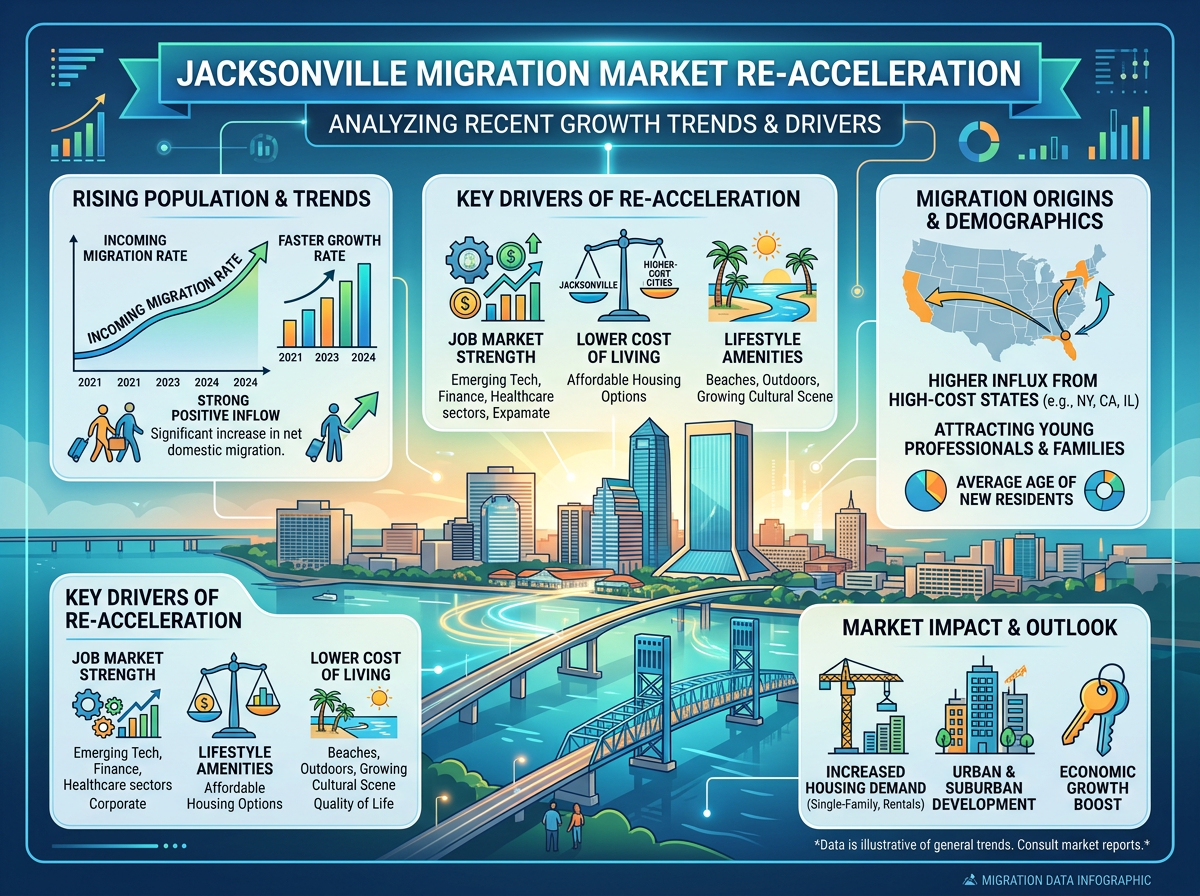
Jacksonville’s migration story is accelerating again in 2026 — and for buyers, sellers, and investors tracking Northeast Florida real estate, understanding what is driving that inbound migration and where it is creating the strongest demand is essential market intelligence. Danielle Fraser at daniellefraserrealestate.com serves buyers and sellers across Jacksonville’s neighborhoods and the broader Northeast Florida market — here is what the current migration picture means for housing demand from the Northside to the Beaches to the suburbs.
Why Is Jacksonville Continuing to Attract Migration in 2026?
Jacksonville’s migration appeal has not faded despite the broader slowdown in Florida’s housing market. The drivers are structural, not cyclical, and they continue to pull people from higher-cost, higher-tax states at a consistent pace.
Relative affordability within Florida. Jacksonville remains meaningfully more affordable than South Florida, Tampa Bay, and even Orlando across most price points. For buyers migrating from the Northeast, Midwest, or California, Jacksonville’s median home prices — still below $350,000 in many established neighborhoods — represent compelling value compared to their origin markets.
No state income tax. Florida’s zero state income tax continues to be a primary driver of migration from high-tax states like New York, New Jersey, California, and Illinois. For high-income professionals relocating for employment at Mayo Clinic, Baptist Health, Fidelity Investments, Fanatics, or VyStar Credit Union, the tax savings alone can represent tens of thousands of dollars annually — a financial argument that is independent of mortgage rates.
Military relocation. NAS Jacksonville remains one of the largest naval air stations in the Southeast and generates consistent housing demand from active duty personnel, veterans, and military families relocating to the area. VA loan-eligible buyers represent a significant and ongoing buyer segment in Duval County. Danielle Fraser, as the wife of a retired U.S. Marine, has deep personal familiarity with military relocation needs and VA loan requirements.
Remote work flexibility. Jacksonville’s coastal lifestyle, outdoor recreation, and lower cost of living relative to major metros continue to attract remote workers who can live anywhere and choose Northeast Florida for quality of life.
Where Is Migration-Driven Demand Strongest in Jacksonville and Northeast Florida?
Suburban single-family homes in established neighborhoods — Mandarin, Fruit Cove, the CR-210 corridor, and Ponte Vedra — attract the largest share of family relocation buyers who prioritize schools, space, and community. St. Johns County schools (Bartram Trail, Creekside, Nease High Schools) remain a primary draw for families with school-age children relocating from other states.
The Jacksonville Beaches — Atlantic Beach, Neptune Beach, and Jacksonville Beach — attract both permanent residents and second-home buyers from colder markets who seek year-round beach access. This segment has proven resilient to rate increases because a meaningful portion of buyers are paying cash or making large down payments from proceeds of home sales in higher-priced markets.
San Marco, Riverside, and Avondale continue to attract buyers seeking urban walkability, architectural character, and waterfront access along the St. Johns River. These historic neighborhoods have appreciated meaningfully and attract buyers from urban markets who want similar walkable character at a fraction of comparable prices in their origin cities.
Frequently Asked Questions: Jacksonville Migration and Housing Demand
Is Jacksonville still growing faster than the national average?
Yes. Jacksonville and the broader Northeast Florida region continue to grow at rates that exceed national averages, driven by the structural factors above. St. Johns County is consistently among Florida’s fastest-growing counties by percentage, which directly supports sustained housing demand in communities like Nocatee, RiverTown, and Beacon Lake.
How does migration affect home prices in Jacksonville?
Sustained inbound migration creates a consistent floor under home values by maintaining demand even as inventory increases. Communities with strong migration appeal — good schools, employer access, lifestyle amenities — hold value better in softening markets than communities without these draws.
Is Jacksonville a good market for real estate investors in 2026?
Jacksonville’s sustained population growth, diversified employer base, and relative affordability make it a compelling long-term investment market. Single-family rentals in established Southside, Mandarin, and Arlington neighborhoods, and workforce housing near major employment corridors, continue to generate investor interest.
Key Takeaway
Jacksonville’s migration-driven housing demand is re-accelerating in 2026, powered by structural advantages — affordability, no state income tax, military presence, and coastal lifestyle — that rates alone cannot eliminate. For buyers and investors looking at Northeast Florida with a long-term perspective, the migration story provides a compelling fundamental case for the region’s sustained demand. Danielle Fraser helps buyers and investors understand exactly where that demand is creating the most opportunity right now.
Contact Danielle Fraser, P.A. today:
📞 (904) 907-4559
📧 danielle@daniellefraserrealestate.com
🌐 daniellefraserrealestate.com