
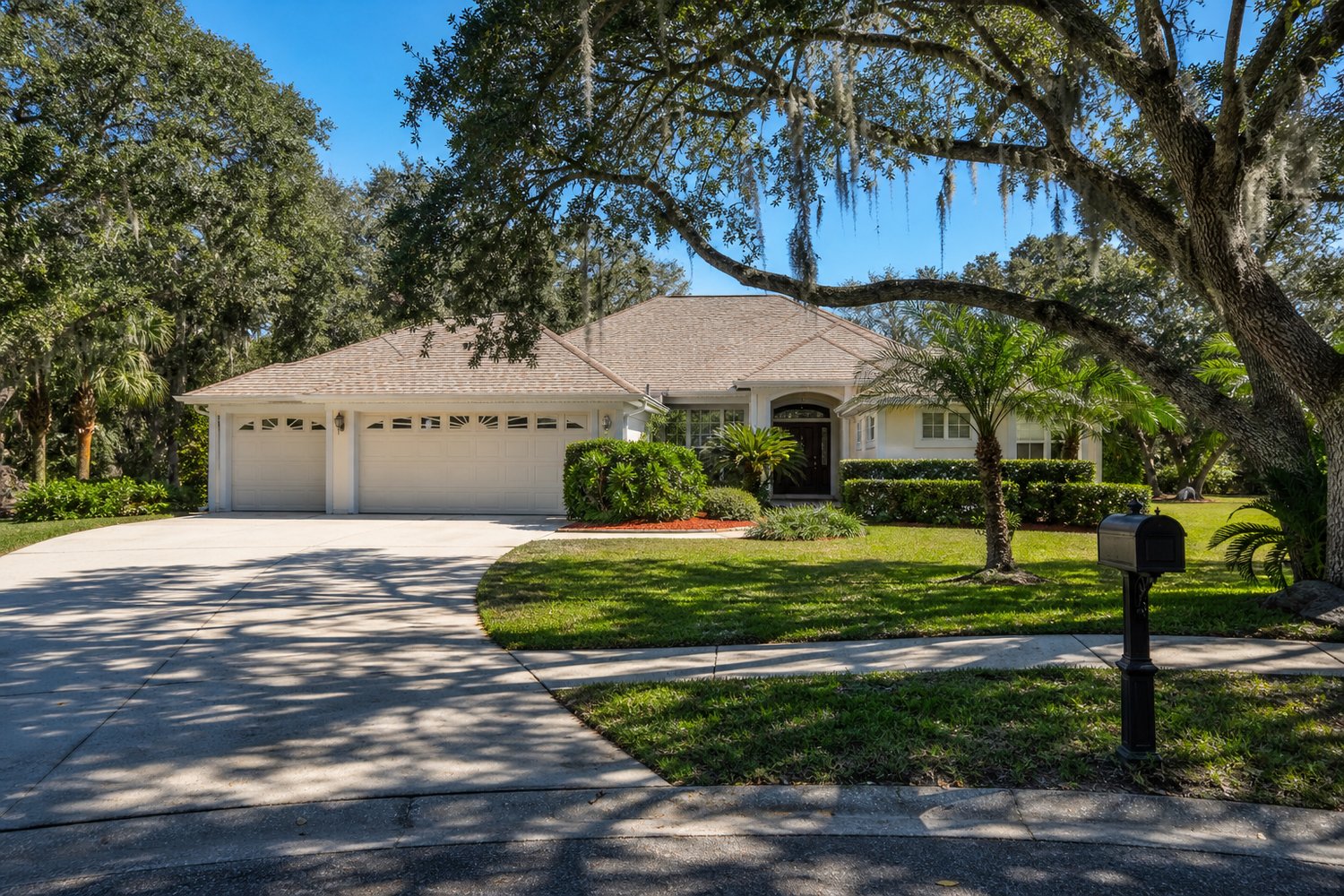
Whether you are buying in Ponte Vedra, St. Augustine, Palm Coast, or Jacksonville, build one monthly number before you settle on a price range: the mortgage, homeowners insurance, property taxes, any HOA or CDD charges, utilities, and a reserve for roof and HVAC work. Get property-specific figures for each home you seriously consider, because they vary far more than the loan payment does.
What are the costs beyond the mortgage payment on a Northeast Florida home?
The costs beyond the mortgage payment on a Northeast Florida home are homeowners insurance, property taxes, HOA and CDD charges, utilities, and future roof or HVAC replacement, whether you are buying in Ponte Vedra, St. Augustine, Palm Coast, or Jacksonville. Two homes with the same list price can carry very different monthly totals once these are added, so the full ownership budget, not the loan payment alone, should decide your price range.
Key Takeaways
Homeowners insurance in Northeast Florida depends on the exact address, roof age, construction, wind mitigation, flood exposure, and deductible, so a quote on the specific home is the only number worth trusting.
Standard homeowners insurance generally does not replace a separate flood policy, and whether your lender requires one depends on the property’s flood-zone designation.
CDD assessments can appear on the property-tax bill or be collected separately, so you need to confirm the amount and the remaining repayment schedule for the specific parcel.
HOA charges are set by each association, so the current budget, reserve information, and any pending special assessments tell you more than the monthly dues figure alone.
A roof or HVAC system near the end of its life is a real future cost, so the installation date belongs in your budget before you make an offer.
How do property taxes and insurance change your monthly budget?
Property taxes and insurance are usually the two largest costs beyond the mortgage payment, and both are specific to the individual home. Neither one can be pulled from a listing’s headline price, so you need to verify them for each property you’re considering.
How are Florida property taxes calculated?
Florida property taxes are administered through county property appraisers and tax collectors, and the annual bill is based on the property’s assessed value and the local millage. In Jacksonville that means the Duval County Property Appraiser and Duval County Tax Collector. In St. Augustine and the surrounding area, it means the St. Johns County Property Appraiser and Tax Collector.
Here’s the part buyers miss: the seller’s current tax bill doesn’t automatically tell you what you’ll owe. Homestead exemption amounts and eligibility rules are set through the Florida Department of Revenue and your county property appraiser, so confirm how they apply to your situation. I’d rather you hear that from me before you write an offer than discover it at your first tax bill.
How much can homeowners insurance add?
Homeowners insurance can add a meaningful amount to your monthly cost, and the range is wide. Premiums vary with location, construction type, roof age, wind-mitigation features, deductible, and each insurer’s underwriting. For more detail, I broke it down in Home Insurance Costs in Northeast Florida: A Buyer’s Guide.
The practical step is to request a quote using the exact address and construction details before your inspection period ends. A quote on the real home beats any average, because averages hide the roof that makes one house expensive to insure and the one next door cheap.
Do you need separate flood insurance?
Standard homeowners insurance generally does not substitute for a separate flood policy. Whether your lender requires flood coverage depends on the property’s flood-zone designation and your loan circumstances, so this requires a property-specific determination. If you’re shopping near the water, in places like St. Augustine Beach or Flagler Beach, or along the intracoastal and tidal creeks, check flood-zone status early and price coverage into your budget. I’d treat that as one of the first questions on any waterfront search.
How do HOA and CDD charges affect what a home really costs?
HOA and CDD charges are recurring obligations that sit on top of your mortgage, and they can differ sharply from one community to the next. Both need to be verified for the specific home, not assumed from a neighboring listing.
What should you ask about HOA dues?
HOA assessments are property-specific. Ask the association or management company for:
The current assessment amount and how often it is paid
What the dues include (landscaping, amenities, gate, insurance, and so on)
The current budget and reserve information
Any pending or planned special assessments
The governing documents, including rental and use restrictions
The dues figure alone doesn’t tell you whether the association is well funded. A low monthly charge paired with thin reserves can mean a larger bill later.
What is a CDD and how do you find out if a home has one?
A Community Development District (CDD) is a special-purpose district that can levy assessments on the properties inside it. CDD assessments can appear on the property-tax bill or be collected separately, depending on the district’s procedures. To find out whether a home has one, check the parcel records and ask your agent and title company to confirm the district.
Then verify three things for that parcel: the current assessment, the remaining repayment schedule or outstanding bond obligation, and any separate operations-and-maintenance charge. A CDD assessment can change how comfortable a price feels, which is why I want to confirm it before we decide what range makes sense.
Where do you verify each cost?
| Ownership cost | Where to verify it | What can change it |
|---|---|---|
| Property taxes | County property appraiser and tax collector (St. Johns, Flagler, or Duval) | Assessed value, millage, exemptions |
| Homeowners insurance | Quote for the exact address | Roof age, construction, wind mitigation, deductible, insurer |
| Flood insurance | Flood-zone determination and a quote | Zone designation, lender requirements, elevation |
| HOA dues | Association or management company, governing documents | Budget, reserves, special assessments |
| CDD assessment | Parcel records and the district | Bond repayment schedule, operations charges |
| Utilities | The property’s actual service providers | Provider, usage, sewer availability, irrigation |
| Roof and HVAC | Inspection, permits, maintenance and warranty records | Age, material, coastal exposure, upkeep |
What about utilities, roof, and HVAC after closing?
Utilities are the cost you feel every month, and roof and HVAC are the cost that arrives all at once. Both belong in your budget before you settle on a price range.
What utility costs should you compare?
Utility costs depend on the provider, service territory, meter size, usage, sewer availability, irrigation, stormwater charges, and solid-waste service. Service can differ between the City of Jacksonville, the City of St. Augustine, and St. Johns County, so don’t assume two homes in the same area are served the same way. Ask who provides water, sewer, and trash for the specific address, and whether the home is on septic or sewer.
How old is too old for a roof or HVAC system?
There is no single age that applies to every home. Future replacement exposure depends on installation date, material, coastal weather exposure, maintenance, warranty terms, and system type. A coastal home and an inland home of the same age can be in very different shape.
Confirm installation dates and permits where available, have the inspection estimate remaining useful life, and ask for maintenance and warranty records. Then treat the age as a negotiating point and a savings target. Understanding the complete cost of ownership means seeing a 15-year-old system as a future expense you’re buying along with the house.
Which ownership costs can increase after you buy?
Insurance premiums, property taxes, HOA dues, special assessments, and utility charges can all change after closing. That’s why I’d rather you set your comfortable range with some room built in, not at the edge of what a lender approves. Cash needed at closing is a separate question, covered in How Much Cash You Need to Buy a Home in Northeast Florida and What Homebuyers Pay at Closing in St. Augustine and Jacksonville.
How do you put the full budget together?
Get pre-approved so you know what a lender will allow, then treat that as a ceiling, not a target.
For each home you seriously consider, collect the insurance quote, tax information, HOA and CDD details, utility providers, and roof and HVAC ages.
Add them to the mortgage payment to find the real monthly cost.
Compare homes on that total, not on list price alone.
This is exactly the kind of comparison I run with my clients before they make an offer. Every home has its own numbers, and the costs beyond the mortgage payment are where two similar homes pull apart.
If you’d like to know what past clients say about working with me, you can read my reviews on Google and Zillow.
Frequently Asked Questions About Homeownership Costs in Northeast Florida
What should I budget each month for property taxes on a home in Ponte Vedra, St. Augustine, Palm Coast, or Jacksonville?
The right figure comes from the specific property’s assessed value, local millage, and any exemptions, so check the county property appraiser and tax collector records for the parcel. Ponte Vedra and St. Augustine are in St. Johns County, Palm Coast is in Flagler County, and Jacksonville is in Duval County. Don’t rely on the seller’s current bill without confirming how it will apply to you.
Do I need separate flood insurance in Northeast Florida coastal areas like Ponte Vedra, St. Augustine, or Palm Coast?
Standard homeowners insurance generally does not substitute for a separate flood policy. Whether your lender requires flood coverage depends on the property’s flood-zone designation and your loan, so get a property-specific determination early, especially for homes near the water.
How can I find out whether a home has an HOA or CDD fee?
Check the listing, parcel records, and the property’s governing documents, then ask the association or management company for current dues, budget, reserves, and pending special assessments. For a CDD, identify the district from the parcel records and confirm the current assessment and repayment schedule. I can help you track these down before you write an offer.
Are CDD assessments included in the property-tax bill?
Sometimes. CDD assessments can appear on the property-tax bill or be collected separately, depending on the district’s procedures. Verify the collection method, the amount, and the remaining obligation for the specific parcel.
How old is too old for a roof or HVAC system when buying a Florida home?
There’s no universal cutoff, because replacement timing depends on installation date, material, coastal exposure, maintenance, and warranty terms. Ask for installation dates, permits, and maintenance records, and have your inspector assess remaining useful life so you can plan for the replacement.
The costs beyond the mortgage payment are what turn a price range that seems workable into one that feels comfortable. I’ll help you gather the real numbers on each home, compare the full ownership budget, and be honest about it when a house costs more to own than its price suggests.
Sources
FEMA Flood Map Service Center (accessed Nov. 2026)
Florida Department of Revenue, Property Tax Information for Taxpayers (accessed Nov. 2026)
St. Johns County Property Appraiser (accessed Nov. 2026)
Flagler County Property Appraiser (accessed Nov. 2026)
Duval County Property Appraiser (accessed Nov. 2026)
Florida Statutes, Chapter 190: Community Development Districts (accessed Nov. 2026)
Ready to compare the full cost of ownership? I’m glad to go over the numbers with you, or you can search listings here.
Call or text 904.907.4559
Danielle Fraser, P.A., REALTOR®
About Danielle Fraser
Danielle Fraser is a real estate advisor in St. Augustine and Northeast Florida, affiliated with Berkshire Hathaway HomeServices Florida Network Realty. With $60M+ in career sales, eight years of experience, and a background in aerospace program management, she brings a disciplined, data-driven approach to luxury, waterfront, historic, and lifestyle-driven real estate. A licensed pilot, community leader, and the St. Augustine & St. Johns County Board of REALTORS® 2022 REALTOR® of the Year, Danielle serves buyers, sellers, and investors across St. Johns, Flagler, and Duval Counties.
Berkshire Hathaway HomeServices Florida Network Realty · 904.907.4559
Equal Housing Opportunity. Danielle Fraser, P.A., REALTOR®, Sales Associate | Florida Real Estate Commission (FREC). Listing and market information is deemed reliable but not guaranteed and is subject to change. This article is general information, not legal, tax, or financial advice; confirm your own numbers with your title company, tax advisor, or lender.